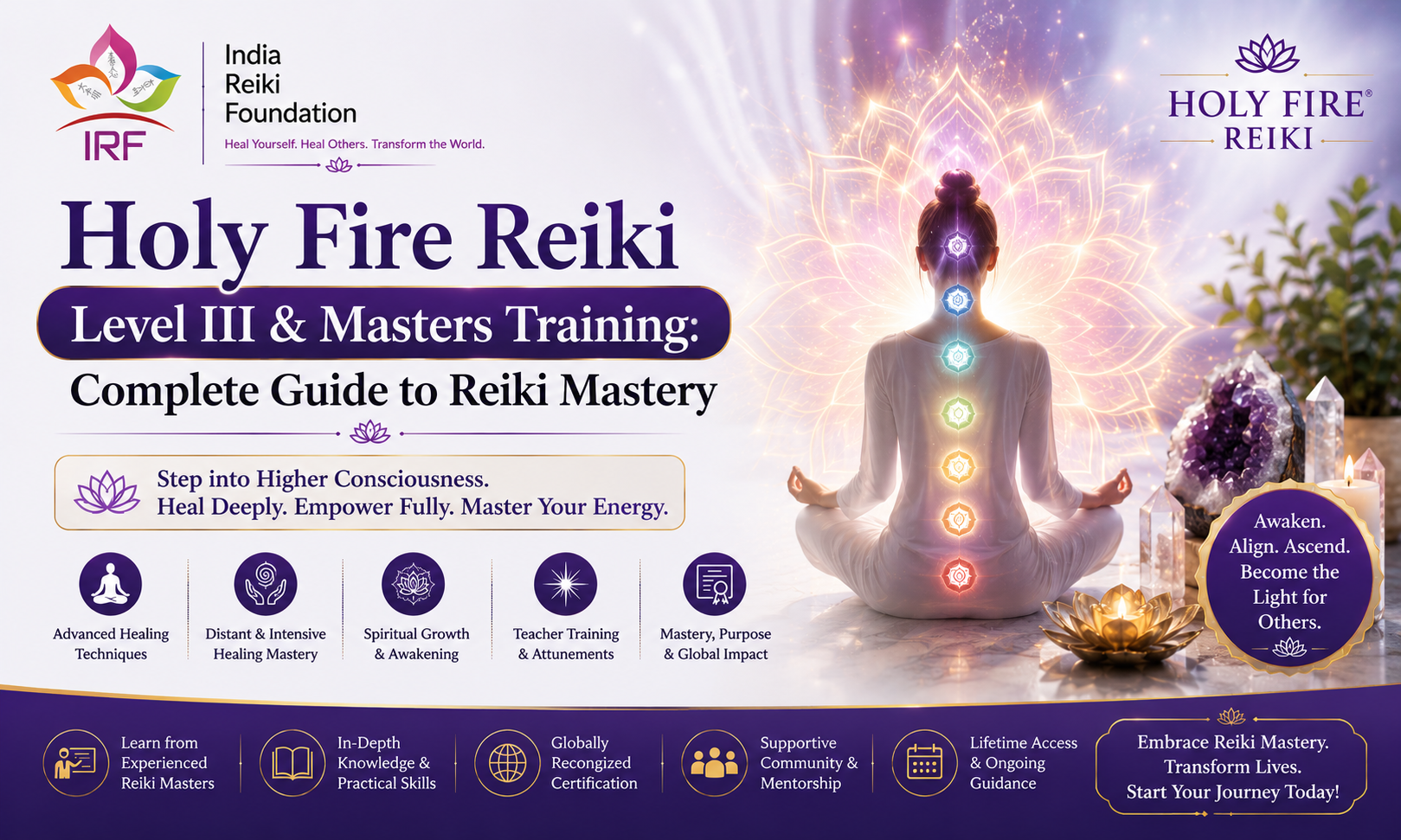
Reiki mastery is not simply about reaching another course level. For many practitioners, it represents a deeper commitment to self-practice, spiritual development, responsible healing, and eventually guiding others on their Reiki journey. Holy Fire Reiki Level III & Masters Training is designed for practitioners who are ready to move beyond foundational Reiki practice and explore the Master level with greater understanding, discipline, and awareness.
At India Reiki Foundation, the advanced Holy Fire Reiki journey combines spiritual experience with structured learning. Students explore the Master Symbol, Holy Fire experiences, Placements, Master Ignitions, advanced Reiki practices, meditation, teaching methods, and the responsibilities associated with becoming a Reiki Master Teacher. The emphasis is not only on learning techniques but also on developing the maturity and clarity needed to practise and teach Reiki responsibly.
For people searching for a Holy Fire Reiki Course Online, an advanced Online Reiki Course, or the next stage after an introductory Reiki Healing Course, understanding what Level III and Masters Training actually involves is important before enrolling. This complete guide explains the training, prerequisites, symbols, Ignitions, online learning process, certification, teaching opportunities, and spiritual aspects of Reiki mastery.
Reiki is generally practised as a complementary spiritual and wellness approach. It should not be considered a substitute for qualified medical diagnosis or treatment. Reiki students and practitioners should maintain appropriate professional boundaries when working with others.
What Is Holy Fire Reiki Level III & Masters Training?
Holy Fire Reiki Level III & Masters Training is the advanced stage of Reiki education in which experienced practitioners deepen their healing practice and prepare for Reiki Mastership and teaching. It builds upon the knowledge and experience developed through earlier Reiki levels and introduces advanced spiritual practices, Master-level energy work, and teaching responsibilities.
At Level III, attention shifts from learning basic Reiki techniques toward deeper personal integration. Students explore the Master Symbol, commonly known as Dai Ko Myo, advanced meditation, energetic practices, and the development of a more consistent personal Reiki practice. The training encourages practitioners to look at Reiki not simply as a technique they use occasionally, but as a discipline that can influence their approach to awareness, compassion, service, and personal development.
The Masters component goes further by introducing the processes used when teaching Reiki to others. India Reiki Foundation’s current course structure includes Holy Fire® Master Ignitions, Placements, meditation experiences, advanced healing techniques, teaching methodology, ethical practice, client and student management, and guidance on conducting Reiki training. This makes the program relevant both to practitioners interested in deeper personal mastery and to those who eventually want to teach Reiki professionally.
Who Can Learn Holy Fire Reiki Level III & Masters?
Holy Fire Reiki Level III & Masters is primarily intended for people who already have a foundation in Reiki and feel ready to progress to advanced study. It is especially suitable for Reiki Level II practitioners, experienced healers, existing Reiki Masters who want to explore the Holy Fire system, and individuals who intend to teach Reiki in the future.
India Reiki Foundation identifies certified Holy Fire Reiki Level II practitioners and Usui Reiki Masters wishing to upgrade to Holy Fire Reiki among the learners suited to this advanced training. The course is also positioned for healers and spiritual practitioners interested in expanding their existing practice.
However, becoming a Reiki Master should not be treated simply as collecting another certificate. A learner benefits greatly from regular self-Reiki, familiarity with the earlier symbols and practices, experience conducting Reiki sessions, and a sincere willingness to continue learning. Mastership involves responsibility because the practitioner may eventually guide students who depend on them for accurate instruction and ethical leadership.
What Are the Prerequisites for Holy Fire Reiki Master Training?
A strong understanding of earlier Reiki levels is the most important preparation for Master training. Although people from different Reiki lineages may enter Holy Fire Reiki training through different routes, students should normally be comfortable with Level I and Level II practices before progressing into advanced Master-level work.
The current India Reiki Foundation course information specifically identifies Holy Fire Reiki Level II practitioners and Usui Reiki Masters among suitable participants. It also explains that Reiki should be understood progressively because the way students work with Reiki changes as they move through the levels.
Before joining, students should ideally be familiar with self-treatment, Reiki hand positions, working with previously taught Reiki symbols, distance Reiki concepts, meditation, energetic awareness, and basic session practices. Regular practice is valuable because Level III is intended to deepen an existing relationship with Reiki rather than introduce Reiki for the first time. If you are completely new to Reiki, beginning with a foundational Reiki Healing Course or Holy Fire Reiki Level I and II training provides a more structured path toward advanced Mastership.
What Do You Learn in Holy Fire Reiki Level III?
Holy Fire Reiki Level III focuses on advanced practice, greater self-awareness, Master Symbol work, meditation, and preparation for Reiki Mastership. It is the point where students begin approaching Reiki from the perspective of mastery rather than only technique. One of the central areas of Level III is the Dai Ko Myo Master Symbol. Students learn its meaning within the Reiki system, how it is integrated into advanced practice, and how Master-level work differs from earlier stages. The training may also involve deeper meditation and Holy Fire experiences intended to encourage reflection, energetic awareness, inner clarity, and greater consistency in personal practice.
India Reiki Foundation describes Level III as including Master Symbol empowerment, Holy Fire healing meditations, Master-level energy work, and practices intended to strengthen inner guidance and spiritual development. The purpose is not to make exaggerated promises about becoming more spiritually powerful than others. Reiki mastery is better understood as developing greater responsibility, humility, consistency, knowledge, and awareness in the way Reiki is practised.
What Do You Learn in Holy Fire Reiki Master Training?
Holy Fire Reiki Master Training prepares students to move from being advanced practitioners toward becoming Reiki teachers. The learning therefore includes both personal Master-level experiences and practical knowledge about conducting training for others. Students study how Holy Fire Placements and Ignitions are used within the teaching system, how Reiki classes can be structured, how meditations and experiences are facilitated, and how students should be supported during the learning process. They also explore communication, ethics, boundaries, session structure, and the responsibilities involved in teaching an energy-healing practice.
According to India Reiki Foundation’s course outline, the Masters Training includes Holy Fire Master Ignitions, Placements, Master Symbol empowerment, advanced healing techniques, spiritual development, teaching the Holy Fire system, client and student management, and certification. For someone choosing a Holy Fire Reiki Course Online, this teaching component is particularly important. A quality Master course should provide more than theoretical notes; students need explanation, demonstration, guided experiences, interaction, practice, and opportunities to resolve questions with an experienced teacher.
What Is the Dai Ko Myo Master Symbol in Holy Fire Reiki?
Dai Ko Myo is traditionally recognised as the Reiki Master Symbol and is introduced at the advanced or Master stage of Reiki training. Within Reiki practice, it is associated with mastery, spiritual awareness, empowerment, and deeper connection with the principles of Reiki.
Students do not learn the Master Symbol merely as an image to memorise. Proper training explores its purpose, traditional context, method of use, and relationship to advanced Reiki practice. This is particularly important because Reiki symbols should be understood within the system in which they are taught instead of being separated from their training context.
India Reiki Foundation’s Level III curriculum specifically includes understanding and working with Dai Ko Myo for Master-level Reiki practice, healing, spiritual development, and teaching. Practitioners are generally encouraged to approach the Master Symbol respectfully and integrate it through regular practice rather than expecting immediate transformation simply from knowing the symbol.
What Are Holy Fire Reiki Master Ignitions?
Holy Fire Reiki Master Ignitions are Master-level energetic processes used within the Holy Fire Reiki system. They serve a role comparable to certain initiation or empowerment processes found in other Reiki teaching systems, although Holy Fire terminology and teaching methodology distinguish Ignitions from traditional hands-on attunements.
During Master training, the teacher prepares and facilitates the experience according to the Holy Fire Reiki system, while the student participates through guided awareness and meditation. These experiences form an important part of progressing into Holy Fire Reiki Mastership.
India Reiki Foundation includes Holy Fire Master Ignitions among the core components of its Level III & Masters program. The curriculum combines these experiences with meditation, advanced Reiki practice, Master Symbol work, and teaching preparation. Ignitions should therefore be understood as part of a complete training process rather than as an isolated technique that can be learned simply by reading instructions online.
What Is the Difference Between Placements, Ignitions and Traditional Attunements?
Placements, Ignitions, and traditional attunements are all associated with Reiki training, but the terminology and method differ depending on the Reiki system and level being taught. Traditional Usui-based Reiki schools commonly use the word attunement for the initiation process through which a teacher prepares a student to practise at a particular Reiki level. The process has historically been conducted directly by the Reiki teacher according to the method of their lineage.
Within Holy Fire Reiki, Placements are associated primarily with earlier levels and symbol empowerment, while Ignitions are used in Master-level training. The International Center for Reiki Training also currently describes Placements and Ignitions as part of Holy Fire Reiki teaching and confirms that Holy Fire Reiki Master classes can be taught online as well as in person. For students, the important point is not simply which terminology sounds more advanced. What matters is receiving systematic instruction, understanding the practice, completing the appropriate training level, and learning from a qualified Reiki Master Teacher.
What Advanced Healing Techniques Are Taught in Holy Fire Reiki Level III & Masters?
Advanced Holy Fire Reiki training expands the practitioner’s understanding of how Reiki may be incorporated into self-practice, meditation, sessions for others, distance work, emotional support practices, and broader spiritual routines.
At India Reiki Foundation, the advanced curriculum includes Reiki techniques aimed at physical, mental, emotional, and karmic levels from the perspective of Reiki practice. Students also participate in guided meditation, Master Symbol work, Holy Fire experiences, and advanced sessions designed to deepen practical understanding.
An important part of advanced training is learning discernment. A Master practitioner needs to know what falls within the scope of Reiki and what requires another qualified professional. Reiki practitioners should avoid diagnosing illnesses, guaranteeing outcomes, or encouraging people to discontinue appropriate healthcare. This ethical awareness makes advanced training particularly valuable for students considering professional practice after completing an Online Reiki Course.
How Does Holy Fire Reiki Master Training Support Spiritual Growth?
Many people approach Reiki Mastership not only because they want to teach but because they want to deepen their personal spiritual practice. Master training creates dedicated time for meditation, self-reflection, Reiki practice, and exploration of concepts such as compassion, service, awareness, inner guidance, and personal responsibility.
Within the Holy Fire Reiki tradition, spiritual growth is often described as becoming increasingly aware of thoughts, emotional patterns, reactions, and one’s relationship with others. Regular practice can encourage students to observe themselves more consciously and approach daily life with greater mindfulness.
India Reiki Foundation incorporates meditation and spiritual-development practices into its Master training, including work connected with the higher self, inner guidance, and continued Reiki practice. Spiritual development is highly personal, so experiences differ from one person to another. The value of the training lies in providing a structured environment for practice and reflection rather than promising a particular spiritual outcome.
How Is Holy Fire Reiki Different from Usui Reiki Mastership?
Usui Reiki and Holy Fire Reiki share important Reiki foundations, but their Master-level teaching methods and terminology differ. Traditional Usui Reiki schools generally emphasise lineage-based attunements and methods passed from Reiki Master to student. Holy Fire Reiki uses the terminology of Placements and Ignitions and incorporates specific guided experiences and meditation processes. India Reiki Foundation’s comparison of the two systems highlights differences in the method of initiation, teaching approach, and Holy Fire-specific practices while still recognising the Reiki foundations from which the system developed.
This does not mean that one system must be considered universally better than the other. Students may connect differently with different Reiki traditions. The right choice depends on previous training, learning objectives, connection with the teacher, teaching style, and whether the student wants to continue within a particular Reiki lineage or system.
Can Usui Reiki Masters Upgrade to Holy Fire Reiki Master Training?
Yes. Experienced Usui Reiki practitioners and Masters may study Holy Fire Reiki when they want to add the Holy Fire system to their existing Reiki education. The current India Reiki Foundation program specifically includes Usui Reiki Masters among the practitioners who may undertake its Holy Fire Reiki Level III & Masters pathway.
An existing Reiki Master still needs to learn the Holy Fire-specific structure. Prior Mastership provides valuable experience, but Placements, Ignitions, Holy Fire experiences, Master-level meditations, and the system’s teaching methodology should be studied properly. This can allow an experienced practitioner to broaden their understanding without dismissing their previous training. Different Reiki systems can form different chapters in a practitioner’s educational journey, provided the distinctions between them are taught clearly.
Can You Learn Holy Fire Reiki Level III & Masters Online?
Yes. Holy Fire Reiki Master training is available online, and advanced Reiki classes can be conducted through live virtual learning when the course system is designed for that format. India Reiki Foundation currently offers its Level III & Masters Training online through Zoom as well as through in-person formats. The International Center for Reiki Training also currently lists online Holy Fire Reiki Master classes and states that qualified graduates can go on to teach Reiki either online or in person.
A live Holy Fire Reiki Course Online offers the advantage of learning from home while still participating in teacher-led discussions, guided meditation, Reiki experiences, demonstrations, practice, and question-and-answer sessions. This is different from simply downloading a few lessons and attempting to understand Mastership independently. When evaluating an Online Reiki Course, look carefully at the trainer’s background, syllabus, interaction with students, practical guidance, certification criteria, teaching support, course duration, and opportunities for questions.
How Long Does Holy Fire Reiki Level III & Masters Training Take?
The duration depends on the training organisation and format. India Reiki Foundation currently structures its complete Holy Fire Reiki Level III & Masters program over approximately 3 to 4 days, with the exact schedule depending on the depth and format of the training. Its current structure covers purification and preparation, Master Symbol work, Ignitions, meditation, advanced healing practice, teaching methodology, Placement and Ignition facilitation, student guidance, and an optional additional integration component. The course page lists approximately four to six hours of training per day, including practice, meditation, breaks, and interaction.
Course duration should not be viewed as a shortcut to mastery. Formal training may take several days, but becoming confident as a Reiki Master Teacher requires continued self-practice, experience, reflection, study, and responsible work with students.
Can You Teach Reiki After Completing Holy Fire Reiki Master Training?
A properly completed Reiki Master Teacher program is designed to provide the training needed to begin teaching Reiki within the scope of the system studied. India Reiki Foundation states that graduates of its Masters Training are prepared to teach and initiate students through Holy Fire Reiki Levels I, II, III, and Master-level training.
However, receiving certification and becoming an effective teacher are not exactly the same thing. A responsible teacher needs practical experience, communication skills, a strong understanding of each Reiki level, clear ethical standards, accurate teaching materials, and the ability to support students with different learning styles. Some graduates begin teaching relatively soon, while others spend additional time strengthening their personal practice first. There is no need to rush. Mastership should ideally develop alongside experience.
How Do You Become a Certified Holy Fire Reiki Master Teacher?
The path generally begins with learning Reiki progressively through foundational levels, building practical experience, completing advanced training, participating in the required Master-level experiences, and successfully completing the teaching component of a recognised Master program.
A typical progression involves Reiki Level I, Reiki Level II, consistent personal practice, Level III or Advanced Reiki Training, and Master Teacher preparation. Students from other Reiki lineages may follow a slightly different pathway when entering Holy Fire Reiki training.
India Reiki Foundation’s current Holy Fire Reiki Level III & Masters Training combines Master-level practice and teaching preparation and provides certification upon course completion. Its curriculum includes the Master Symbol, Placements, Ignitions, meditation, advanced healing work, student/client management, ethical practice, and teaching methods. Certification is an important milestone, but continued study and practice remain essential after completing the formal course.
What Are the Benefits of Holy Fire Reiki Level III & Masters Training?
The primary benefit of Master training is deeper education. Students move beyond foundational practice and develop a more complete understanding of advanced Reiki methods, Master Symbol work, meditation, Reiki teaching, and the responsibilities associated with supporting students.
For personal practice, the training can create a structured opportunity to strengthen consistency, self-awareness, meditation, and connection with one’s Reiki discipline. For professional development, it provides the educational foundation needed to begin building Reiki classes, conducting sessions responsibly, guiding students, and explaining the differences between Reiki levels.
Students also learn how Reiki teaching should be structured rather than relying only on personal intuition. This becomes particularly useful for practitioners who eventually want to organise workshops, individual training, group classes, or online Reiki education. The most meaningful benefit, however, is not simply the title “Master.” It is developing the knowledge and responsibility to practise Reiki with greater awareness.
What Can You Do After Becoming a Holy Fire Reiki Master?
After completing Master training, graduates can continue using Reiki primarily for personal and spiritual development, offer Reiki sessions within an appropriate professional scope, participate in Reiki groups and meditation circles, or gradually move into teaching. Those who choose the teaching pathway may conduct Reiki classes, introduce new students to foundational levels, guide advanced practitioners, facilitate appropriate Reiki experiences, and mentor students as they develop their practice. Some Masters integrate Reiki into an existing wellness practice, while others keep Reiki separate from their main profession.
Becoming a Reiki Master also opens the door to further learning. Mastership should rarely be considered the end of education. Experienced teachers continue studying, practising, reviewing their methods, refining communication, and developing deeper understanding throughout their work.
Why Learn Holy Fire Reiki Level III & Masters with India Reiki Foundation?
India Reiki Foundation offers a structured pathway for students seeking advanced Reiki learning rather than treating Mastership as a stand-alone certificate. Its current course curriculum combines theory, meditation, energetic experiences, advanced practice, teaching methodology, ethics, student management, and certification. The Foundation’s wider platform also offers multiple Reiki levels alongside other spiritual and metaphysical education, while its homepage presents learner experiences across Reiki and related disciplines.
For learners looking specifically for a Holy Fire Reiki Course Online, the availability of live online training provides an opportunity to study without being restricted by location. The current Level III & Masters program is offered both online and in person, allowing students to select a learning format that fits their circumstances.
More importantly, learners should choose any Reiki Master program by considering the quality of instruction, course structure, teacher experience, opportunities for interaction, practical learning, ethical standards, and ongoing commitment required after certification.
Frequently Asked Questions About Holy Fire Reiki Level III & Masters Training
1. Is Holy Fire Reiki Level III the same as Reiki Master Level?
Level III is generally an advanced Reiki stage closely connected with Master-level practice, although course structures differ between Reiki schools. India Reiki Foundation combines Holy Fire Reiki Level III & Masters Training into an advanced program covering both personal mastery and teacher preparation.
2. Do I need Reiki Level I and II before Holy Fire Reiki Master Training?
Students should develop a proper foundation before moving into Master-level learning. Previous Reiki II training or equivalent experience helps students understand symbols, Reiki practice, distance work, and other concepts that advanced training builds upon.
3. Can I become a Holy Fire Reiki Master online?
Yes. Live online Holy Fire Reiki Master classes are available. India Reiki Foundation currently provides its Master training through Zoom as well as in-person formats, and the broader Holy Fire Reiki system also supports online Master training.
4. How long does it take to complete Holy Fire Reiki Master Training?
The formal India Reiki Foundation program currently takes approximately 3–4 days depending on the training format. Mastery itself continues after certification through personal practice, teaching experience, meditation, and continued learning.
5. What symbol is taught in Holy Fire Reiki Level III?
The important Master-level symbol introduced at this stage is Dai Ko Myo, commonly known as the Reiki Master Symbol. Students learn its context, meaning, and application as part of advanced Reiki and Master-level practice.
6. What is the difference between a Reiki Placement and an Ignition?
Within Holy Fire Reiki terminology, Placements are used as part of the training process at earlier Reiki stages, while Ignitions are associated with Master-level empowerment. Both differ in methodology from traditional teacher-led hands-on Reiki attunements.
7. Can a Usui Reiki Master learn Holy Fire Reiki?
Yes. Usui Reiki Masters can study Holy Fire Reiki to understand its specific practices, experiences, Placements, Ignitions, and teaching structure. India Reiki Foundation specifically includes Usui Reiki Masters among suitable learners for its advanced course.
8. Can I teach Reiki after becoming a Holy Fire Reiki Master?
Master Teacher training is intended to prepare qualified practitioners to teach Reiki. Before teaching independently, however, graduates should be confident with the complete curriculum, maintain ethical standards, practise consistently, and understand how to guide students responsibly.
9. Is Holy Fire Reiki better than Usui Reiki?
Neither system needs to be treated as universally better. They have different teaching approaches and initiation methods. The right choice depends on your previous training, spiritual interests, preferred teaching methodology, and the Reiki system you wish to practise and eventually teach.
10. How do I choose the best Holy Fire Reiki Course Online?
Look for live teacher interaction, a clear syllabus, appropriate prerequisites, Master-level experiences, practical teaching guidance, certification requirements, ethical instruction, and opportunities to ask questions. Avoid selecting an Online Reiki Course based only on price or how quickly a certificate is promised.
Conclusion
Holy Fire Reiki Level III & Masters Training represents an important transition from practising Reiki techniques to developing the knowledge, discipline, and responsibility associated with Reiki Mastership. Students explore advanced Reiki practices, Dai Ko Myo, Holy Fire Master Ignitions, Placements, meditation, spiritual development, teaching methodology, ethics, and the practical responsibilities of guiding future students.
For experienced practitioners, the course can provide a structured way to deepen personal Reiki practice while preparing for the role of Reiki Master Teacher. Usui Reiki practitioners may also explore Holy Fire Reiki when they wish to understand a different Master-level approach and expand their existing Reiki education. Choosing the right training is therefore about more than obtaining certification. A strong Holy Fire Reiki Course Online should combine knowledge, practical experience, interaction, guided learning, ethical awareness, and continued practice. Whether your goal is deeper self-development, advanced Reiki practice, professional healing work, or teaching future students, Mastership is best approached as an ongoing journey rather than a final destination.
India Reiki Foundation’s Holy Fire Reiki Level III & Masters program provides an advanced pathway that combines Master-level Reiki learning with teaching preparation in both online and in-person formats. For students who have already built their foundation through an earlier Reiki Healing Course or Online Reiki Course, this stage can become the next meaningful step toward a more complete understanding of Reiki mastery.
India Reiki Foundation | Online Reiki Course & Spiritual Healing Academy
Address- 502–503, Stanford Plaza, Veera Desai Road, Andheri West, Mumbai, Maharashtra 400065, India
Phone number +91 96254 88550
Website- https://indiareikifoundation.com/
Mail- mail@indiareikifoundation.com