Pendulum dowsing is a simple yet fascinating practice that attracts people interested in intuition, spiritual awareness and energy-based learning. One of the reasons beginners are drawn to dowsing is that it does not require complicated equipment or years of previous experience. With a pendulum, a peaceful environment, properly framed questions and regular practice, you can gradually become familiar with the basic techniques of this traditional practice.
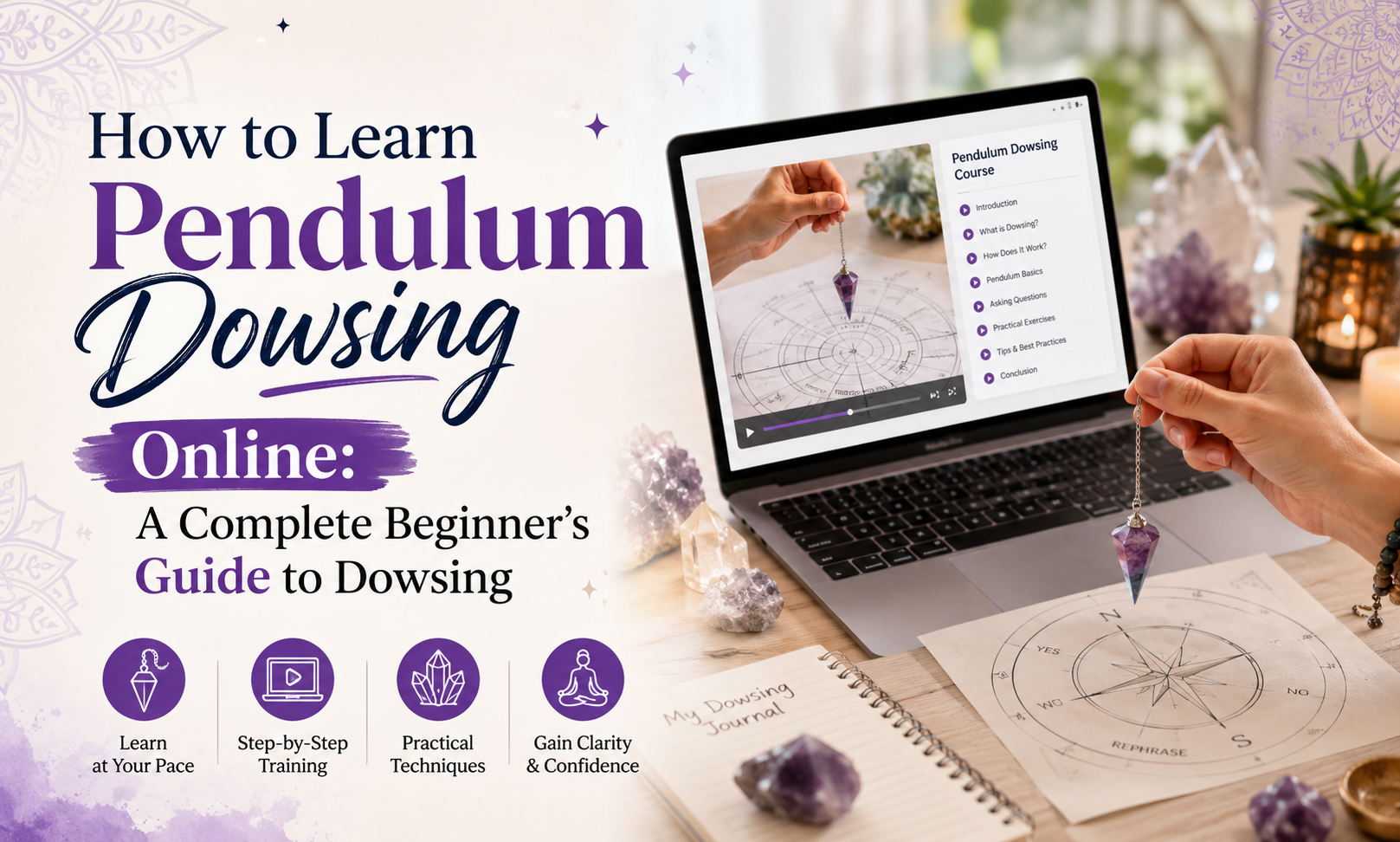
Today, learning dowsing has become more accessible through online training. Instead of depending only on scattered videos or short tutorials, learners can follow a structured Pendulum Dowsing Course Online that explains the fundamentals in a step-by-step manner. Such training can introduce you to pendulum movements, yes-and-no responses, different types of dowsing tools, question formation, meditation and practical exercises that you can perform from home.
At India Reiki Foundation, pendulum dowsing is taught alongside Reiki and other spiritual learning practices. The course is suitable for beginners, including those who have never studied Reiki before. For Reiki practitioners, dowsing may also become an additional skill for exploring traditional chakra, aura and energy-awareness practices.
This beginner’s guide will help you understand what pendulum dowsing is, how to begin practising it, how to establish yes and no signals, which questions to ask, common mistakes to avoid and how an online dowsing course can make the learning process more organised.
What Is Pendulum Dowsing and How Does It Work?
Pendulum dowsing is a traditional method in which a small weighted object suspended from a chain, string or cord is allowed to move freely. The person holding the pendulum observes its direction and traditionally interprets different movements as particular responses. A pendulum may swing from side to side, move backwards and forwards or rotate in clockwise or anticlockwise circles. Practitioners generally establish which movement represents “yes,” “no” or an uncertain response before beginning their questions.
In spiritual practices, pendulum movement is often associated with intuition, energy awareness or subconscious responses. However, there is no need for beginners to treat every movement as an absolute prediction. The early stage of learning is mainly about understanding the technique, controlling unnecessary physical movement, improving concentration and becoming familiar with how the pendulum behaves during different exercises. It is also useful to understand that tiny unconscious movements of the fingers and muscles can influence the pendulum. For this reason, maintaining a relaxed, neutral state of mind is an important part of responsible pendulum practice.
Can Beginners Learn Pendulum Dowsing Online?
Yes, beginners can learn pendulum dowsing online even without previous experience in Reiki, meditation or other energy-based practices. The fundamental techniques are relatively easy to demonstrate through online lessons, and most exercises can be repeated independently at home.
Beginners normally start by understanding how to hold a pendulum correctly, how to keep the arm relaxed and how to establish simple yes-and-no movements. Once these basics become familiar, they can move towards exercises such as question framing, hidden-object practice, pendulum charts and other traditional dowsing techniques.
A structured Pendulum Dowsing Course Online can be especially useful because it gives learners a clear sequence to follow. Instead of jumping between unrelated tutorials, students can build their understanding one concept at a time.
Online learning also provides flexibility. Learners can study from their preferred location and practise exercises repeatedly. India Reiki Foundation offers dowsing learning options designed to help students understand both theoretical concepts and practical techniques.
What Do You Need to Start Pendulum Dowsing?
You do not need an extensive collection of spiritual tools to start learning pendulum dowsing. A simple, balanced pendulum is enough for your first stage of practice. The pendulum may be made from crystal, metal, wood or another suitable material. What matters most for a beginner is that it hangs properly and moves freely. You should be able to hold its chain or cord comfortably while allowing enough distance for the weighted end to swing without obstruction.
A calm environment is equally helpful. Choose a place where you are unlikely to be interrupted and where you can sit comfortably. Supporting your elbow on a table can help reduce unnecessary arm movement during practice.
Keeping a notebook can also improve your learning. You can record your questions, the pendulum signals you observed and anything that affected your concentration. Over time, this provides a useful record of your practice and helps you understand whether your responses remain consistent. Advanced learners may later work with pendulum charts, L-shaped dowsers, bobbers and other dowsing tools, but beginners should first become comfortable with basic pendulum techniques.
How Do You Choose a Pendulum for Dowsing?
There is no single pendulum that every beginner must use. The best choice is usually one that feels comfortable in your hand, hangs evenly and creates movements that are easy to observe.
Crystal pendulums are popular among people interested in spiritual practices, while metal and wooden pendulums are also commonly used. Instead of focusing only on the material, pay attention to balance, weight and ease of movement. A pendulum that is too light may react strongly to small movements, while a very heavy pendulum may feel uncomfortable during longer practice sessions. Beginners often find a medium-weight, symmetrical pendulum easier to manage.
You may also feel naturally attracted to a particular pendulum because of its appearance or material. There is nothing wrong with choosing based on personal preference, but an expensive pendulum is not necessary for learning the basic technique. Once you start practising, using the same pendulum regularly can help you become familiar with its movement rather than constantly adjusting to different tools.
Should You Cleanse or Prepare a Pendulum Before Dowsing?
Many spiritual traditions include pendulum cleansing or preparation before beginning a session. Some practitioners use meditation, intention setting or other cleansing rituals depending on the material of the pendulum. For beginners, however, personal preparation is just as important as preparing the tool itself. Your body should be comfortable, your hand should remain relaxed and your mind should be relatively calm before asking questions.
Sit quietly for a few moments and allow your breathing to settle. Hold the pendulum without deliberately creating movement and wait until it becomes reasonably still.
If you are emotionally upset or strongly hoping for one specific answer, it may be better to practise with simple questions rather than emotionally important subjects. Strong expectations can influence subtle movements of the hand. Students already exploring a Reiki Healing Course may have their own grounding or meditation routine. Such practices can be used before dowsing if they help you become calmer and more focused.
How Do You Use a Dowsing Pendulum Step by Step?
Begin by sitting comfortably and holding the upper end of the pendulum chain or cord between your fingers. Let the weighted end hang freely and keep your wrist as relaxed as possible.
Allow the pendulum to become still before beginning your exercise. Do not deliberately push or rotate it. The next step is to establish your response signals. Ask, “Show me yes,” and observe the direction of movement. Once the pendulum becomes neutral again, ask, “Show me no.” You may also establish a movement for “unclear,” “maybe” or “cannot answer.”
After identifying your signals, practise using questions for which you already know the answer. For example, you might ask whether you are sitting indoors or whether your name is a particular name. Known-answer questions allow you to concentrate on observing the movement without worrying about making an important decision.
When you become more comfortable, begin practising properly framed questions. Ask only one question at a time and avoid trying to force the pendulum in a particular direction. If the movement becomes confusing, stop for a moment, allow the pendulum to return to neutral and relax your hand before continuing. Regular short sessions are generally better for beginners than repeatedly practising for long periods.
How Do You Find Yes, No and Maybe Responses?
There is no universal rule that says clockwise movement must always mean “yes” or that side-to-side movement must always represent “no.” Different people may observe different response patterns. Before asking an important practice question, establish your own signals.
Hold the pendulum freely and ask it to show you “yes.” Observe what happens. After the movement stops, repeat the process for “no.” You can then establish a third signal for “maybe,” “unclear” or “not appropriate to answer.” India Reiki Foundation includes yes-and-no response techniques as part of its dowsing training because understanding these basic signals is essential before attempting more detailed exercises.
You can test the signals several times using questions with known answers. If your response patterns keep changing, do not continue asking the same question repeatedly. Relax, take a break and return to the practice later.
What Questions Should Beginners Ask a Pendulum?
The best beginner questions are simple, specific and easy to understand. Starting with questions whose answers you already know can help you practise observing your established signals. For example, you may ask whether you are currently inside your home, whether you are wearing a particular colour or whether an object placed in front of you is a certain item.
Once you understand the basic movements, you can gradually explore other traditional dowsing exercises such as finding misplaced objects or using charts.
Avoid starting with extremely broad questions such as “Will my whole future be successful?” Such questions have no clear context and may be difficult to interpret. Pendulum dowsing should also not replace qualified medical, legal, financial or safety advice. It is more appropriate to approach dowsing as a spiritual, intuitive or reflective practice rather than as a professional diagnostic or decision-making system.
How Should You Frame Pendulum Dowsing Questions?
Clear question framing can make your practice much easier to understand. A good dowsing question normally focuses on a single subject and can produce a clear response. Avoid asking several questions in one sentence. For example, “Should I choose this career and will I become successful and happy?” combines several different ideas. Breaking the question into separate parts makes the exercise more manageable.
Neutral language is also important. If the wording strongly pushes you towards the response you want, your expectations may influence your movements. Whenever relevant, add clear context. Instead of asking something very broad about the future, define what you are asking and the situation you are considering. India Reiki Foundation includes question framing within its pendulum training because learning how to ask appropriately structured questions is an important part of developing a disciplined practice.
How Can Pendulum Dowsing Be Used in Everyday Practice?
Pendulum dowsing has traditionally been explored for several purposes, ranging from simple yes-and-no exercises to finding misplaced objects and practising intuitive awareness. Some spiritual practitioners use pendulums during chakra or aura-related exercises. Others incorporate them into meditation, energy awareness or traditional home-scanning practices.
India Reiki Foundation’s dowsing curriculum also introduces learners to areas such as locating lost or hidden objects, checking energy through dowsing exercises, working with different dowsing tools and exploring chakra and aura scanning methods.
People studying an Online Reiki Course may also become interested in pendulum dowsing because both subjects are commonly explored within broader spiritual and energy-learning environments. However, dowsing is best practised with realistic expectations. It should not be considered a replacement for scientific measurements, professional diagnosis or expert advice.
What Pendulum Dowsing Mistakes Should Beginners Avoid?
A very common mistake is expecting the pendulum to provide perfect or consistent answers immediately. Beginners need time to become comfortable with the tool, improve their question structure and recognise how their own physical state affects movement. Holding the chain too tightly is another problem. Excessive tension in your fingers, wrist or arm can make the pendulum more difficult to observe naturally. Beginners should also avoid asking unclear questions. Broad sentences without a specific subject or context often produce responses that are difficult to interpret.
Another important mistake is asking the same question repeatedly until the desired response appears. Doing this increases the chance that expectation will influence the pendulum. Emotional questions can create similar difficulties. When you desperately want one particular answer, remaining neutral becomes harder. Most importantly, avoid treating every pendulum movement as unquestionable information. Dowsing should be explored gradually, with patience and awareness of its limitations.
How Can You Improve Your Pendulum Dowsing Practice?
Regular practice is one of the simplest ways to improve your familiarity with pendulum dowsing. You do not need to spend hours practising every day. Short and focused sessions are usually enough for beginners. Begin each practice with familiar exercises. Establish your yes-and-no signals, ask a few known-answer questions and observe whether your response pattern remains similar.
Try to maintain a consistent hand position and chain length during early practice. Changing several physical factors at once can make your observations more difficult to compare. Keeping a journal is also valuable. Record the questions you asked, your response signals and whether you felt calm, tired, distracted or emotionally involved. These observations can help you identify why different sessions may produce different movements.
As you progress, you can gradually introduce hidden-object exercises, charts and other techniques taught within a structured dowsing programme. Meditation can also support concentration. India Reiki Foundation includes meditation and connecting with the dowsing tool as part of its training approach.
What Will You Learn in a Pendulum Dowsing Course Online?
A well-organised Pendulum Dowsing Course Online should introduce the practice gradually instead of moving immediately into complicated exercises. India Reiki Foundation’s dowsing training begins with the meaning and background of dowsing, different types of dowsers and an understanding of how dowsing is traditionally practised.
Students can then learn how to become familiar with a dowsing tool, practise meditation with it and establish yes-and-no responses. The training also introduces practical exercises such as locating hidden or misplaced objects and working with additional dowsing tools. Learners may explore L-shaped dowsers and bobbers as they progress.
The curriculum further includes traditional practices associated with chakra scanning, aura exercises, home scanning, checking food energy, protection methods and selected crystal-related concepts. With organised instruction, beginners can progress logically instead of trying to understand everything at once.
How Do You Choose the Best Pendulum Dowsing Course Online?
Before joining an online dowsing programme, start by checking its syllabus. A beginner-friendly course should explain the foundations before introducing more advanced applications. Look for topics such as pendulum handling, understanding movements, establishing response signals, meditation, question framing and guided practical exercises.
The teaching format should also match the way you prefer to learn. Pre-recorded sessions provide greater flexibility because you can revisit lessons, while live sessions may be suitable for students who value interaction and demonstrations. Consider the background of the organisation providing the training and whether its curriculum is clearly explained before enrolment.
Avoid programmes that depend heavily on promises of guaranteed future predictions or perfect accuracy. A responsible course should encourage practice, observation and gradual skill development. If you are interested in both Reiki and dowsing, selecting an institute that offers a wider range of spiritual education can also make it easier to continue your learning journey.
Why Learn Pendulum Dowsing with India Reiki Foundation?
India Reiki Foundation provides pendulum dowsing training within a broader platform dedicated to Reiki, metaphysical subjects and spiritual education. The programme is designed so that beginners can start learning dowsing without first completing Reiki training. This makes it suitable for people discovering intuitive practices for the first time as well as Reiki learners who want to expand their understanding.
The published course structure goes beyond simple pendulum movements. Students can explore the introduction and history of dowsing, various dowsing tools, meditation, yes-and-no techniques, object-finding exercises, L-shaped dowsers, bobbers, chakra and aura scanning and home-related exercises.
The foundation also offers subjects such as Vedic-Usui Reiki, Holy Fire Reiki, Crystal Healing, Numerology, Palmistry and Akashic Records, allowing interested learners to explore several spiritual disciplines through one learning platform. For someone searching for a structured and beginner-friendly Pendulum Dowsing Course Online, India Reiki Foundation offers a practical route to begin learning without requiring previous dowsing or Reiki experience.
Frequently Asked Questions About Pendulum Dowsing
Can anyone learn pendulum dowsing?
Yes. Basic pendulum dowsing techniques can be learned by beginners. You can start by understanding how to hold the pendulum, identify basic response movements and practise with clear questions before progressing to more detailed exercises.
Do I need Reiki knowledge before learning pendulum dowsing?
No. Reiki training is not compulsory for starting pendulum dowsing. However, people already learning Reiki may choose to study dowsing as an additional spiritual and energy-awareness practice.
How long does it take to learn pendulum dowsing?
Basic pendulum handling and yes-and-no techniques can be introduced relatively quickly, but consistency develops through regular practice. The learning period varies from person to person depending on practice and understanding.
Which pendulum is best for a beginner?
Choose a well-balanced pendulum that is comfortable to hold and swings freely. Crystal, metal and wooden pendulums can all be used. Ease of handling is more important than purchasing an expensive tool.
How do I know my pendulum’s yes and no signals?
Ask the pendulum separately to “show me yes” and “show me no.” Observe each movement and confirm the pattern with simple questions whose answers you already know.
Why does my pendulum sometimes change its answer?
Fatigue, hand movement, tension, emotional expectations and unclear questions can all influence pendulum movement. If responses become inconsistent, stop the session and return to practice when you are calm and relaxed.
What questions should a beginner ask?
Begin with simple factual questions that have clear answers. Once you become comfortable with the signals, gradually explore other traditional dowsing exercises rather than beginning with emotionally important or complicated questions.
Can I learn pendulum dowsing completely online?
Yes. The fundamental techniques can be explained and demonstrated online. However, regular independent practice remains necessary for becoming comfortable with pendulum movements and question framing.
Can Reiki practitioners use pendulum dowsing?
Yes. Many Reiki learners explore dowsing as an additional practice connected with traditional chakra, aura and energy-awareness exercises. The two subjects can be studied independently or explored together after understanding their individual foundations.
Is an online pendulum dowsing course useful for beginners?
A structured online course can be helpful because it gives beginners an organised learning path. Instead of depending on disconnected tutorials, students can progress from foundational techniques to practical exercises in a planned sequence.
Conclusion
Learning pendulum dowsing is not simply about watching a pendulum move. A beginner needs to understand how to hold the tool comfortably, establish personal response signals, ask properly structured questions, observe movements calmly and recognise when expectations may affect a session. A structured Pendulum Dowsing Course Online can make this process easier by providing lessons and exercises in the correct order. Beginners can first learn basic pendulum techniques and gradually move towards yes-and-no practice, meditation, object-finding exercises, different dowsing tools and traditional energy-awareness applications.
India Reiki Foundation provides a learning environment where beginners can explore pendulum dowsing even without previous Reiki experience. Students who are also interested in an Online Reiki Course or Reiki Healing Course can later expand their understanding of related spiritual practices through the foundation’s wider range of programmes.
The most useful approach is to begin patiently and practise consistently. Keep your questions simple, remain relaxed and treat pendulum dowsing as an intuitive and spiritual learning practice rather than a guaranteed system for prediction, diagnosis or major professional decisions. For learners who prefer guided training instead of trying to understand dowsing completely on their own, India Reiki Foundation’s Pendulum Dowsing Course Online offers a structured starting point for developing knowledge and practical familiarity with the traditional art of dowsing.
India Reiki Foundation | Online Reiki Course & Spiritual Healing Academy
Adress- 502-503, Stanford Plaza, Veera Desai Road, Andheri West, Mumbai, Maharashtra 400065, India
Phone number +91 96254 88550
Website- indiareikifoundation.com
Mail- mail@indiareikifoundation.com